In a nutshell
- 🔬 Baking soda’s dual action: mild alkalinity loosens fats while its gentle abrasiveness lifts residue; add a drop of washing-up liquid for quick, seconds-fast degreasing.
- 🧽 Proven methods: warm-pan sprinkle and slurry for fresh splatters; a paste dwell (10–15 min) for stuck-on grime; controlled alkaline simmer for burnt residues.
- 🥘 Pan-specific care: robust on stainless steel, damp paste and re-season for cast iron, soft sponges for non-stick, brief contact on aluminium to avoid dulling.
- ⚠️ Myth-busting & safety: don’t mix baking soda with vinegar (they neutralise), distinguish it from washing soda, use light pressure and avoid abrasive pads on coatings.
- ⏱️ Efficiency tips: act while the pan is warm, let contact time do the work, keep a shaker by the hob, and finish with hot water for a fast, scratch-free shine.
Grease has a way of clinging to pans long after supper, leaving even the best scouring pads defeated. Yet there’s a classic kitchen fix that still feels like alchemy: baking soda. This pantry staple can lift slick fat, break down sticky residues, and polish away the dull film that spoils a pan’s shine. Used smartly, it turns a dreaded scrub into a quick, almost satisfying ritual. On fresh splatters, it can shift grease in seconds; on baked-on grime, it accelerates the whole clean-up dramatically. Here’s the science, the method, and the must-know cautions for a true pan revival that saves time, money, and your cookware’s finish.
Why Baking Soda Breaks Grease So Fast
At its heart, sodium bicarbonate is a mild alkali. That tiny nudge in pH helps to loosen the bonds between fatty residues and metal surfaces, making grease less stubborn and more mobile. It doesn’t so much “dissolve oil” as it destabilises it, turning slick patches into something water and a cloth can lift away. The powder’s grains add a gentle abrasive effect, scuffing the film without gouging steel or wrecking coatings. This double action—chemical nudge plus micro-scrub—is why it appears to work like magic.
There’s another trick happening on contact with food residues. Many burnt-on bits are slightly acidic; baking soda buffers that acidity, softening the crust so it can be prised off. If you follow with hot water, the heat reduces viscosity, so loosened grease slides instead of smearing. Add a drop of washing-up liquid and you get synergy: the soap traps the freed fat, the soda keeps pH favourable, and the abrasive clears the last film. Result: quicker, easier wiping, less elbow grease.
On tougher jobs, time becomes an ingredient. A baking soda paste (two parts powder to one part water) sits where liquid cleaners run, letting alkalinity work at the interface. That dwell time weakens the hold of carbonised fats. You still scrub, yes, but the surface fights back far less. The endgame is the same: a chrome-bright pan without a sweat-soaked slog.
Step-By-Step Methods That Actually Work
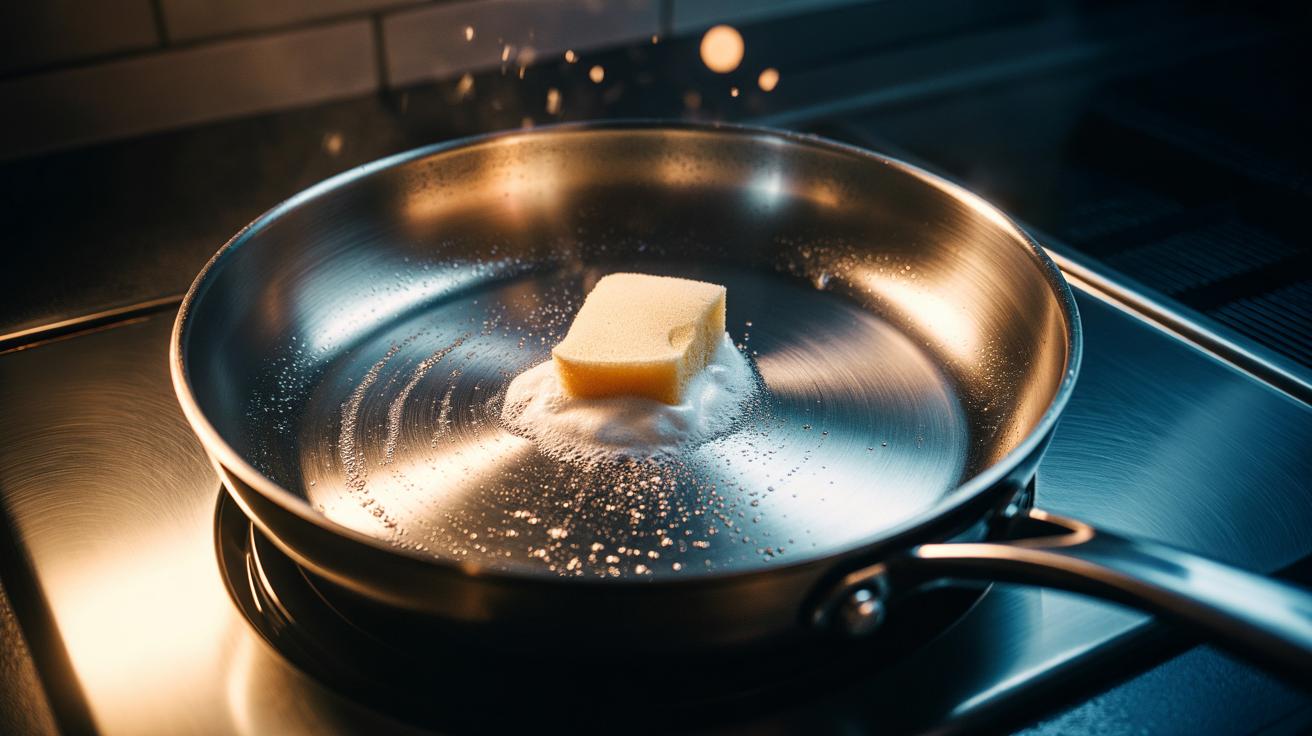
For fresh splatters, speed is everything. While the pan is warm—but not scorching—sprinkle a thin veil of baking soda over the greasy patches. Add a single drop of washing-up liquid, then a splash of hot water to make a light slurry. Agitate with a soft sponge. In many cases, the grease lifts in seconds, turning the slurry cloudy as it traps the fat. Rinse and dry. If a rainbow film remains, repeat with a pinch more powder and a microfibre cloth.
For stuck-on remnants, build a paste: two teaspoons of soda to one teaspoon of water. Spread over the grime, leave for 10–15 minutes, then work it with a non-scratch pad in small circles. On stainless steel, you can add a teaspoon of fine salt for extra bite; on non-stick, skip the salt and keep pressure light. Stubborn corners? A soft-bristled brush or the cut edge of a wooden spatula loosens the last flecks without gouging.
For burnt chaos, try a controlled simmer. Cover the pan bottom with water (2–3 cm), add 1 tablespoon of baking soda per litre, bring to a gentle simmer for 5 minutes, then cool slightly. The hot alkaline bath softens carbon and fatty residues. Scrape with a silicone spatula, pour out, and finish with a brief paste polish. Avoid boiling dry and keep this method short on aluminium to prevent dulling.
What to Use on Different Pans
Not all cookware tolerates the same level of zeal, and the brilliance of baking soda is that it adapts. Stainless steel loves a robust paste and a confident scrub; it’s hard-wearing and responds with a handsome shine. Cast iron is different: keep water exposure minimal, use a damp paste and a stiff brush, then rinse, dry over heat, and re-oil to protect the seasoning. Non-stick and enamel prefer finesse. Gentle pressure, softer pads, and brief contact times keep coatings intact while still removing greasy films.
Aluminium, especially bare or anodised, prefers shorter sessions and a quick rinse to avoid dulling. Copper is fine on the inside if it’s lined with stainless steel; on bare copper, test in a discreet spot. The rule of thumb: match the abrasiveness to the material, and let time—not force—do the heavy lifting. Use the reference below to choose the safest route for your pan on a messy day.
| Pan Material | Best Technique | Caution |
|---|---|---|
| Stainless Steel | Paste + circular scrub; simmer method for burns | Avoid steel wool swirl marks |
| Cast Iron | Damp paste + brush; dry and re-season | Do not soak; keep water brief |
| Carbon Steel | Light paste; immediate dry and oil | Protect seasoning layer |
| Non-Stick | Thin slurry; soft sponge only | No salt; no abrasive pads |
| Enameled | Paste or simmer; nylon pad | Check for chips; avoid harsh scrapers |
| Aluminium | Quick slurry; fast rinse and dry | Prolonged contact may dull |
Myth-Busting and Smart Add-Ons
Don’t mix baking soda and vinegar in the same bowl and expect a super-cleaner. The fizz is theatrical, but it neutralises both: you end up with water and a mild salt. If you love the vinegar sparkle, use it first to cut mineral haze, rinse, then deploy baking soda to tackle grease. Another common mix-up: baking soda versus washing soda (sodium carbonate). Washing soda is more alkaline and more aggressive; it’s brilliant for drains and oven trays but can be too harsh on delicate coatings. Keep baking soda for routine pan care.
Want extra glide? Pair a soda paste with a drop of washing-up liquid for surfactant support, or warm the pan briefly before application to soften residues. Store an open shaker of sodium bicarbonate near the hob; a quick dusting the moment dinner is plated is the definition of effortless. For safety, avoid inhaling the fine powder, wear gloves if you have sensitive skin, and keep abrasion modest on coated cookware. The clever bit isn’t force—it’s sequence, contact time, and the right touch for the right surface.
Used with a cool head and a warm pan, baking soda restores shine without scratching pride—or steel. It’s cheap, safe, and quietly effective, turning the post-meal trudge into a tidy two-minute ritual you’ll actually repeat. From sizzly splatters to baked-on blunders, the same principles apply: a nudge of alkalinity, a hint of abrasion, and a little patience. That’s the formula for ultimate pan revival. What’s the greasiest situation you’ll throw at sodium bicarbonate this week, and which method will you test first to see the seconds-saving payoff?
Did you like it?4.5/5 (23)