In a nutshell
- 🧠 Treat clutter as unmade decisions; clear cognitive load first to cut questions, restore focus, and create rooms that “answer” where things belong.
- ⏱️ Follow the Rapid Room Reset: 10-minute timebox, surface sweep left-to-right, a single-lap reset basket run, then restore visual anchors for instant calm.
- 🛠️ Lean on simple kit and habits: edge labels, open-topped containers, a project corral, plus the one-touch rule and 90-second archive to keep momentum.
- 🌐 Apply it anywhere—flats, kitchens, studios, newsrooms, even wards—using a shareable Reset Map, colour-coded zones, and timers to support varied teams and neurodivergent needs.
- 🚀 Expect results: reduced decision fatigue, faster starts, fewer lost tools; organisation becomes maintenance, not a project—test it with a 7-day, 10-minute daily reset.
Clutter doesn’t just steal floor space; it steals headspace. When we walk into a room and see piles, mixed categories, unfinished cups, our brain starts triaging. Attention fragments. Decisions stall. Journal deadlines, family life, and the next brew all crowd in at once. The antidote is a fast, repeatable routine that clears cognitive load first and items second. Think of it as a newsroom reset for your home: brief, brisk, and broadcast every hour. Small resets beat marathon clean‑ups. By focusing on mental friction points, you create rooms that behave better, not merely look tidier. Your space becomes a cue, not a question.
What Cognitive Load Clearing Actually Means
Most mess isn’t dirt. It’s unmade decisions. Every stray object asks a question, and each question siphons attention. That drain is cognitive load—the mental effort required to process what’s in front of you. When it spikes, people reach for easy choices: dump drawers, shove things behind doors, defer again. The clever move is to remove the questions, fast. Reduce decisions and you reduce disorder. You’re not polishing skirting boards; you’re pruning choices. That is why the “Rapid Room Reset” starts with cognition, not cloths.
In practice, you target three frictions. First, attentional residue—leftover thinking from previous tasks—gets cleared by resetting visible surfaces. Second, category ambiguity—items without a clear home—shrinks via pre‑labelled containers. Third, recollection lag—forgetting why something is where it is—disappears with simple, consistent cues. A room arranged around these principles becomes self‑explaining. You look up, you know where the mug lives, and where pending work waits. Spaces that answer questions stop generating clutter. That’s the essence of cognitive load clearing: fewer queries, quicker action, calmer brains.
The Rapid Room Reset Method, Step by Step
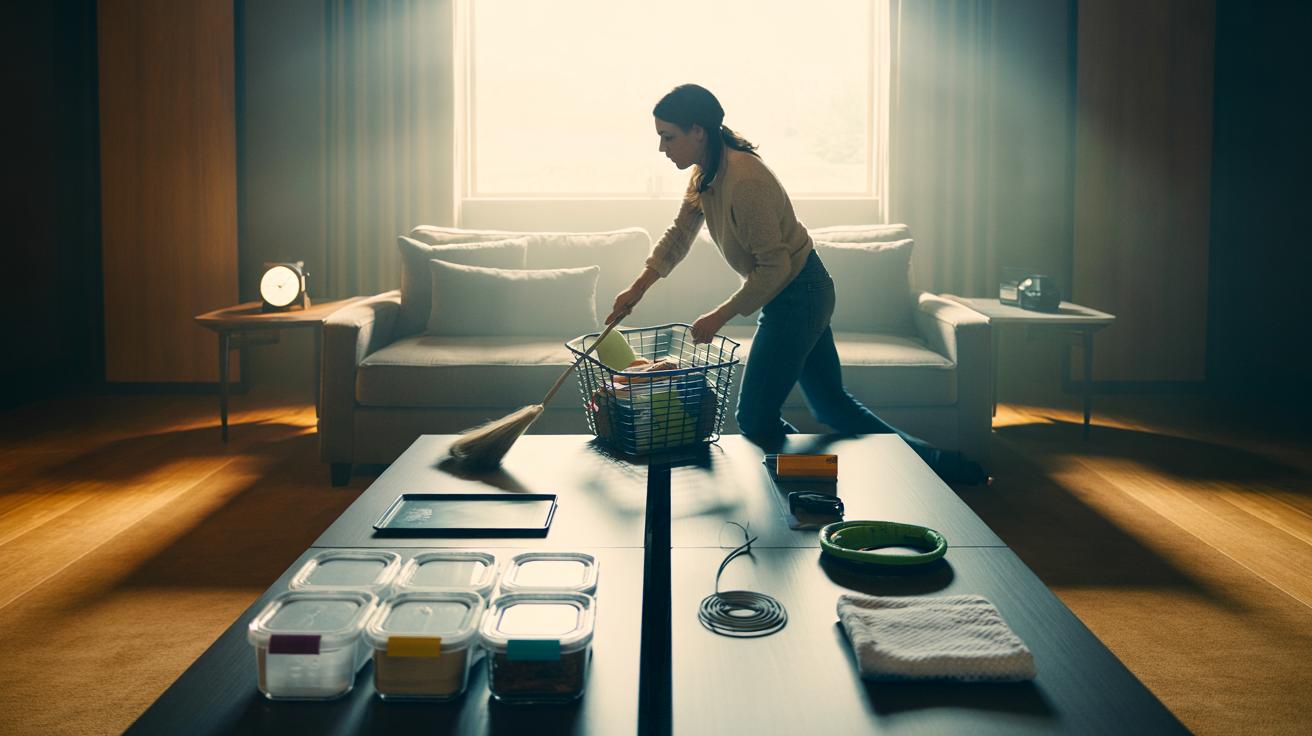
Timebox it. Ten minutes, not an hour. Start at the largest visual surface and sweep laterally: table, sofa, bed, then floor. Anything that belongs elsewhere lands in a reset basket. Don’t detour. Detours kill speed. Once surfaces read “clear enough,” you empty the basket in a single lap of the home, following a fixed route. One circuit, one decision per item. Next, restore anchors—lamp straight, cushions aligned, laptop closed, charging lead coiled. These micro‑gestures matter. They are visual punctuation that tells the brain a chapter has ended. Finally, reset tools: bin liner replaced, microfibre folded, labels facing front.
| Friction | Reset Action | Time | Outcome |
|---|---|---|---|
| Visual noise | Surface sweep left-to-right | 3 mins | Immediate calm |
| Category confusion | Drop into labelled zones | 2 mins | Fewer choices |
| Stalled tasks | Open project tray only | 3 mins | Clear next action |
| Late resets | Timer + anchor cue | 2 mins | Daily consistency |
Adopt two rules to keep pace. The one‑touch rule: when an item is in your hand, its home must be your next move. The 90‑second archive: anything you can file in under 90 seconds is filed now. Set a gentle chime as a cue before lunch and at dusk; attach the routine to tea or a dog walk. Link the reset to rhythms you already have, and the habit will ride existing momentum.
Tools, Cues, and Tiny Habits That Stick
Fancy gear is optional; a few smart props are not. Keep a rigid reset basket by the door. It’s your shuttle for orphan items. Use open‑topped containers for “active” zones—post, returns, kit in use—so nothing hides. Label edges, not lids, to ensure the cue faces you. A slim tray becomes a project corral, separating today’s work from aspirational clutter. For paper, a two‑slot sorter beats a mountain: “Action” and “Archive.” Nothing else. Constraints create clarity.
Next, wire in behavioural triggers. Pair the reset with existing anchors: kettle on, timer on; lights dim, reset begins. Visual cues count. Place a folded microfibre on the desk each morning; it’s a flag for end‑of‑day closure. Use implementation intentions: “After I finish my last call, I sweep the desk.” Keep the first minute ridiculously easy: align items, toss obvious rubbish, walk the basket. That easy start lowers the threshold, and momentum does the rest. Reward it briefly—music, a stretch, a marked checkbox. Tiny celebrations harden habits, turning a chore into a ritual you actually keep.
From Home Offices to Hospitals: Where It Works
The Rapid Room Reset scales. In a studio flat, it’s a nightly sweep that restores the sofa to a reading nook. In a family kitchen, it’s an after‑meal blitz: clear island, load dishwasher, reset breakfast kit. In newsrooms and labs, it reduces attentional residue, helping teams switch tasks without dragging mental debris. Healthcare settings use analogous “bed‑space resets” between patients; tools return to marked zones, labels face front, surfaces signal safety. Order becomes an information system, not an aesthetic preference.
Crucially, the method respects realities: interruptions, fatigue, variable shifts. Keep timeboxes small and visible. Post a Reset Map on the wall—five steps, 10 minutes—to make the routine shareable. Guests or children can follow it. For neurodivergent users, ramp up predictability with colour‑coded zones and auditory timers. For creative studios, protect one messy “play” area but enforce strict borders and a nightly perimeter reset. The result is consistent: reduced decision fatigue, quicker starts, fewer lost tools, calmer rooms. And because the routine is brief, it survives busy weeks and returns dividends when you most need them.
A room that resets itself isn’t magic; it’s design meeting behaviour. You remove questions, add cues, and keep the loop short. The benefit compounds quietly. Less rummaging, fewer arguments, faster starts. Organisation becomes maintenance, not a project. That frees time for work, rest, and genuine leisure rather than endless tidying. The next step is simple: pick one room, one anchor time, and run a 10‑minute reset for seven days. Notice what frictions vanish. Notice what remains. Then refine. Which space in your life is crying out for a rapid reset, and what cue will you choose to begin?
Did you like it?4.5/5 (26)