In a nutshell
- 🫖 Tea bags lift stubborn hard water marks from shower glass and taps in under two minutes—fast, frugal, and low-tox.
- 🔬 The science: mild acidity from tannic acid loosens calcium carbonate; warmth and 60–90 seconds’ contact help break the bond without harming finishes.
- 🛁 Two-minute method: dip a black tea bag, squeeze, wipe in circles, re-wet if needed, then rinse and buff dry with microfibre to prevent streaks.
- 🧱 Safe on glass, stainless steel, and chrome; avoid marble/limestone; for heavy limescale, use citric acid or vinegar first, then tea for maintenance.
- 🌱 Cost and sustainability: pennies per clean, use spent bags, fewer plastic bottles; black tea is strongest, green milder, herbal best for light smears.
It sounds implausible until you try it: a humble tea bag wiping away stubborn hard water marks from shower screens and taps in under two minutes. No harsh chemicals. No wheezing fumes. Just tannins doing quiet, clever work. In bathrooms across Britain, where chalky limescale and soap scum cling like a bad habit, this kitchen-cupboard trick feels like a small miracle. The science is simple yet satisfying, the method faster than boiling a kettle, and the cost close to nothing. If your glass is fogged with mineral haze, tea can lift it fast while leaving a clear, streak-free shine. Let’s unpack the how, the why, and the when.
Why Tea Bags Cut Through Hard Water Marks
The secret weapon is tannic acid and other polyphenols in black tea. These plant compounds are mildly acidic and slightly astringent. On bathroom glass and chrome, they act like a gentle descaler, loosening the mineral films—mainly calcium carbonate—that form from hard water. The reaction is quick because thin mineral deposits dissolve or detach fastest under mild acidity. The result: less elbow grease, less time, more gleam. There’s also a light surfactant-like effect that helps break the bond between scum and surface, so smears slide off rather than smear around.
Temperature matters. A warm, freshly dipped bag transfers heat and moisture that soften residue. Contact time matters too. Give the wet bag 60–90 seconds on stubborn areas and you’ll see the haze fade as you wipe. The pH of black tea typically sits around 4.9–5.5, which is enough to nibble at scale without biting into finishes. That’s why it’s safer for daily touch-ups than many bottled bathroom acids. Used sensibly, tea cleans glass and stainless steel without scratching coatings. Always finish with a clean water rinse and a dry buff to prevent new deposits.
Does any tea work? Mostly. Black tea is most effective because it’s tannin-rich; green tea is milder; herbal infusions vary. If your water is extremely hard, tea won’t erase mountain-thick crusts—but it will handle day-to-day film, the visible fog that dulls a shower in a week.
Two-Minute Method for Showers and Taps
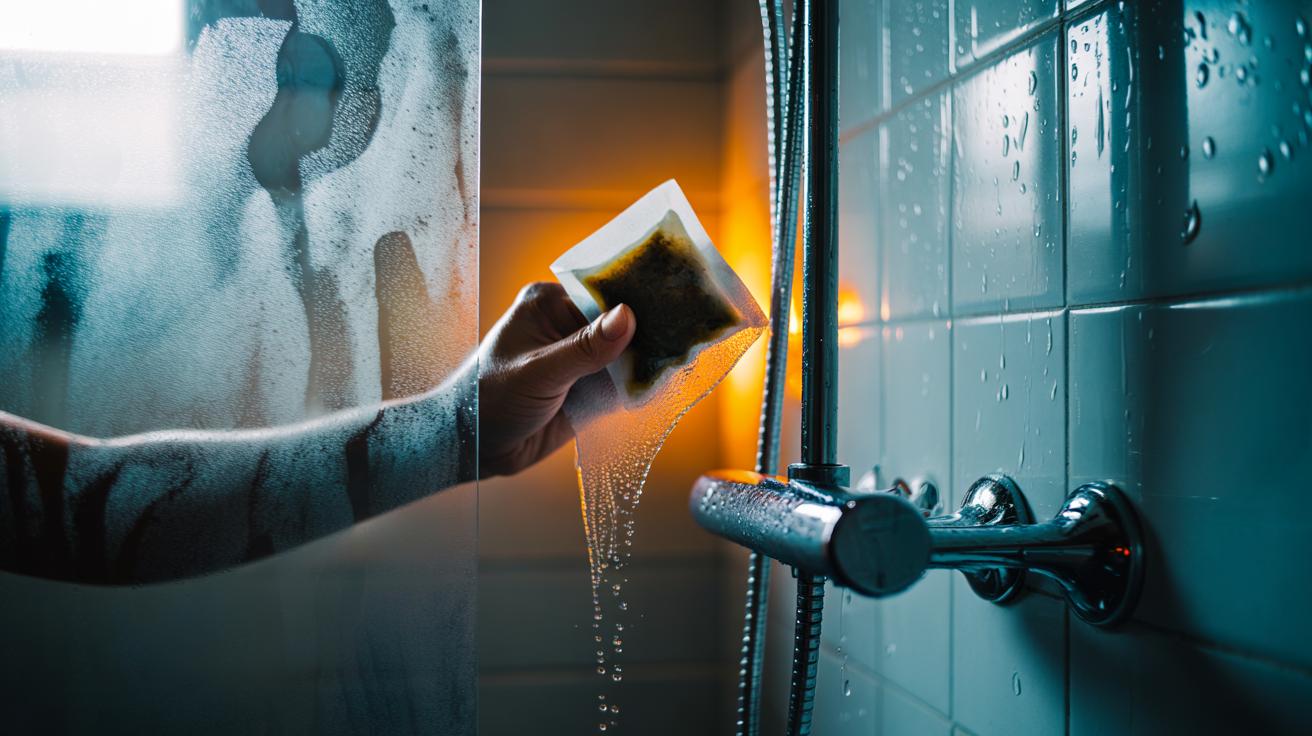
First, run a kettle and pour a splash—no need for a full brew. Dunk one or two black tea bags in hot water for 15–20 seconds. Squeeze lightly so they’re moist, not dripping. Press the bag directly onto the glass or metal, working in small circles. You’ll feel the bag glide as the film loosens. Re-wet once if it dries. Give the worst patches a slow, deliberate pass for 60–90 seconds. Then rinse with warm water from the shower head to stop the acidity, and buff dry with a microfibre cloth for that camera-ready shine. That’s it. No scrubbing. No fumes.
For taps and fittings, fold the bag over curves and edges. It clings well, making contact where paper towels fail. On silicone seals, keep the pass light; tea can tint porous caulk if left sitting. If you’re fighting soap scum as well as scale, a drop of washing-up liquid on the cloth after the tea wipe helps emulsify residue before the final rinse. Repeat weekly and you prevent the layered build-up that usually demands heavy chemicals. The beauty is speed: from dip to dazzling in under two minutes for a typical shower panel and mixer tap.
When Tea Works—and When It Doesn’t
Tea excels on clear glass, stainless steel, and chrome-plated brass. It’s fine for acrylic screens if you use a soft cloth and gentle pressure. It’s less suitable for natural stone. Do not use tea on marble, limestone, or travertine—acids etch carbonate stone. That includes stone-effect composites with real mineral content. If you have protective coatings—hydrophobic glass sealants, for example—test a discreet corner first. Tea is usually safe, but every finish is different, and you don’t want to cloud a pricey treatment.
Deposits thicker than a fingernail scrape or those chalky stalactites under leaky fittings are beyond tea’s pay grade. For those, step up to citric acid or white vinegar soaks, then return to tea for maintenance. Watch for staining risks: pale grout, unsealed silicone, or rough plastic can pick up a faint tan if you leave tea sitting. Keep contact short, rinse promptly, and you’ll avoid tinting. Patch tests take 30 seconds and save regrets. And always buff dry; drying prevents fresh minerals from re-settling as the water evaporates.
If allergies are a concern, wear gloves. While rare, tea can irritate sensitive skin. Also, don’t overthink brands. Budget bags are often tannin-heavy and perfect for the job. Save the single-origin Darjeeling for your mug.
Cost, Sustainability, and Smart Alternatives
A box of supermarket black tea costs pennies per clean. Spent bags from your morning brew work too—reactivate with hot water and you’re away. It’s a low-waste, low-tox routine that trims plastic bottles from the weekly shop. Compared with vinegar, tea’s scent is subtler and its action gentler, making it a better candidate for frequent, fast spruce-ups that keep glass bright between deeper cleans. If you want a step-change on old scale, rotate: tea weekly, citric-acid gel monthly. That combination keeps bathrooms glossy without turning them into chemical warzones.
Different teas, different strengths. Use this quick guide when you’re raiding the cupboard before guests arrive.
| Tea Type | Best For | Contact Time | Notes |
|---|---|---|---|
| Black tea | Glass screens, chrome taps | 60–90 seconds | Highest tannins; fastest visible results |
| Green tea | Light film on stainless | 90–120 seconds | Milder; may need an extra pass |
| Herbal infusions | Deodorising, light smears | Varies | Low tannins; not for heavy scale |
Simple tricks endure because they solve daily problems with minimal faff, and the tea-bag wipe is exactly that: fast, frugal, faintly delightful. Once you’ve seen a cloudy shower door snap back to clarity, the habit sticks. Keep a couple of bags in a jar under the sink, and you’ve built a two-minute rescue into your routine. Clean little, clean often, and heavy scrubs become history. Are you ready to try the tea test this week—and which surface in your bathroom will be the first to sparkle?
Did you like it?4.4/5 (25)