In a nutshell
- 🧪 The science: uncooked rice traps volatile odours via porosity and gentle desiccation, reducing humidity that carries smells; oven-dried white rice outperforms brown for faster, cleaner adsorption.
- 🧰 Setup: Place 100–150 g in a shallow open container on the top shelf and near the crisper; stir or rotate to expose fresh surfaces, and keep grains dry; pair (in a separate cup) with bicarbonate of soda for stubborn, acidic odours.
- 🗓️ Maintenance: “Recharge” rice by low-heat baking and cool before reuse; typical rhythm is re-dry weekly and replace monthly, with a quick response after pungent spills to restore freshness quickly.
- 🧼 Safety: Clean spills first, keep rice contained to avoid scattering, don’t place above open butter or cheese, monitor fridge seals, and maintain 3–5°C; handle carefully if sensitive to rice and dispose of odour-laden grains responsibly.
- 🌍 Benefits: A plastic-free, low-cost, fragrance-free method that keeps food flavours honest, complements alternatives like activated charcoal, and delivers rapid odour control without chemical gels.
Open your fridge after curry night and the smell can hit like a headline. You could reach for plastic pods and perfumed gels. Or you could turn to a humble bag of rice. In UK kitchens, uncooked rice is already a staple, cheap and easy to find. It’s also a quiet, effective odour sponge that works without synthetic fragrances or disposable plastics. A teaspoon of science meets a dash of thrift, and your crisper drawers breathe easier. This piece explains why rice absorbs smells so quickly, how to deploy it safely, and when to refresh it—so your food tastes like itself, not last week’s leftovers.
The Science of Starch and Smell Molecules
Fridge funk comes from volatile compounds—think sulphur notes from onions, amines from fish, and aldehydes from rancid fats. These odour molecules travel with moisture, diffusing into every corner. Uncooked rice counters them via two linked powers: porosity and desiccation. Each grain holds microscopic starch granules—amylose and amylopectin—that create a surprisingly large internal surface area. Those granules physically adsorb vapours, while the grain itself draws down ambient humidity. Lower humidity means fewer odours carried on the air and less bacterial bustle.
Not all rice behaves identically. Polished white varieties are drier out of the bag; brown rice has more oils, which reduces capacity for certain smells. For instant impact, heat rice (spread thin) in a low oven for 10 minutes to drive off residual moisture, then cool it in a clean container. Warmer, freshly dried grains offer more open sites to welcome volatiles. A dry fridge is a less smelly fridge, and dry rice accelerates the effect. Crucially, use rice uncooked; cooked rice is damp, prone to spoilage, and will amplify odours rather than quell them.
Setting Up a Plastic-Free Fridge Routine
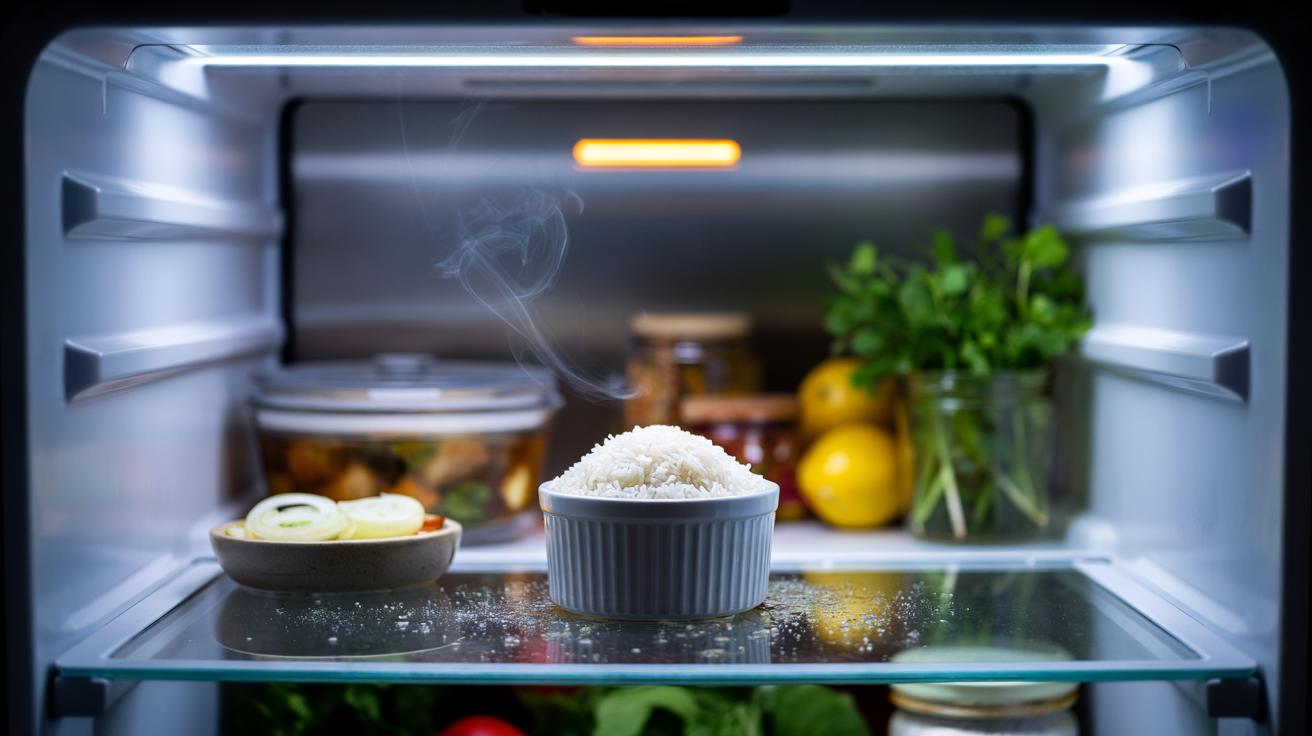
Start simple. Pour 100–150 g of uncooked white rice into a shallow, food-safe ramekin or a wide-mouthed jam jar without the lid. Place one on the top shelf and another near the vegetable drawer where moisture pools. Keep grains below the level of any fans or vents to avoid scattering. You should notice a fresher aroma within a few hours; marked improvement typically arrives by the next morning. If a smell lingers after 24 hours, rotate the container to the source zone and stir the grains to expose new surfaces.
For stubborn cases—garlic week, fish feast—pair rice with a pinch of bicarbonate of soda in a separate cup. Don’t mix them: rice manages humidity and organics; soda excels with acidic volatiles. You can “recharge” rice by baking it again for 10 minutes at low heat, cooling, then returning it to the fridge. Add optional scent traps like a strip of lemon peel in a separate dish if you want freshness without synthetic perfume. Keep containers open enough for airflow, but out of reach of drips and spills.
| Odour Absorber | Best For | Pros | Watch-outs | Refresh Cycle |
|---|---|---|---|---|
| Uncooked Rice | Mixed fridge smells, humidity | Plastic-free, cheap, fast | Keep very dry; avoid spills | Re-dry weekly; replace monthly |
| Bicarbonate of Soda | Acidic odours | Highly effective, inert | Avoid contact with open foods | Stir weekly; replace 1–2 months |
| Activated Charcoal | Strong, complex odours | Powerful adsorption | Costs more; dusty | Reactivate or replace monthly |
| Coffee Grounds (Dry) | Masking short-term smells | Strong aroma | Masks rather than absorbs; can clump | Replace weekly |
Safety, Hygiene, and When to Replace
Odour control is not a substitute for hygiene. Clean the spill, then treat the smell. Wipe shelves with warm soapy water, rinse, and dry before deploying rice; high-protein leaks from meat or dairy will outmuscle any absorber. Keep rice in a container that prevents grains from scattering into food, and never place it right above open butter or cheese—starch dust can taint delicate fats. If condensation is chronic, check door seals and temperature: 3–5°C is the UK Food Standards Agency sweet spot for safety and freshness.
How long does rice last in the fridge as an odour absorber? If it stays dry, you can re-dry and reuse it several times. Replace monthly, sooner after very pungent episodes. If rice becomes clumpy or discoloured, discard it. Do not compost raw, odour-laden rice in open heaps where it could attract pests; bag it before binning, or re-dry thoroughly and reuse for non-food odours in shoe cupboards. People with severe rice allergies should avoid handling the grains directly. When in doubt, refresh—stale rice can broadcast the very smells you worked to tame.
Rice won’t write your shopping list, but it will keep your fridge newsworthy for the right reasons: crisp greens, honest cheese, and leftovers that taste like themselves. With simple placement, timely refreshes, and a brief clean-up routine, you can ditch plastic deodorisers and still win the odour war. The method is frugal, fast, and surprisingly satisfying. Small habit, big payoff. Ready to try a bowl tonight—or will you experiment with a rice-and-bicarb tag team and see which clears the air faster in your kitchen?
Did you like it?4.6/5 (20)