In a nutshell
- ✨ Rice bran lifts oily smudges via fine-particle adsorption and mild abrasion, delivering a residue-free shine on stainless steel, quartz, and sealed stone—no buffing required.
- 🕒 Follow the five-minute method: dust a light veil of bran, gently sweep, then wipe with a dry microfiber; if needed, a quick damp pass and dry finish eliminate streaks.
- 🧪 Surface safety: ideal for stainless (wipe with the grain), sealed stone, laminates, and glass; avoid unsealed marble/limestone, use feather-light pressure on soft finishes, test first, and store bran airtight.
- 🧼 Cleaner comparisons: unlike silicone sprays that leave films or gritty baking soda, bran lifts rather than layers, preventing dust attraction and reducing repeat wiping.
- 💷 Low-cost, low-waste: as a milling by-product, rice bran is inexpensive, compostable after use, and perfect for quick fingerprint, haze, and oily bloom removal.
There’s a fast, quietly brilliant trick spreading from test kitchens to busy family homes: use rice bran to make fingerprinted, cloudy, or greasy counters gleam in minutes. No polishes. No elbow-torching buffing. Just a pantry by-product doing science on your surfaces. The hushed secret is how bran’s ultrafine particles and lipid-loving compounds pull smudges off stainless steel, quartz, and sealed stone without leaving a waxy film. It’s cheap, low-waste, and oddly satisfying. Five minutes from dull to bright can genuinely be enough if you follow a light-touch method. Here’s why it works, how to try it, and where to be cautious.
Why Rice Bran Works on Smudges
Rice bran is the golden-brown layer milled from rice grains. Close up, it’s a dense mesh of microparticles—cellulose, proteins, and starches—dusted with a whisper of natural oils and waxes. That combination is the point. Smudges are mostly oils from skin mixed with airborne grime; bran’s fine particles cling to those films via adsorption, while trace lipids loosen the bond on slick surfaces. Think of it as a dry-clean effect: lift and trap, not smear and polish. The particles are mildly abrasive—gentle enough for sealed stone and stainless steel when used dry, yet effective at disrupting haze.
Because the bran grabs residue rather than pushing it around, you don’t need aggressive rubbing or buffing to get clarity back. Spread a light veil, give it a moment, then wipe. No chalky streaks, no silicone build-up, no fragrance fog. Another plus: bran’s natural antioxidants such as oryzanol help limit quick re-tarnishing on metal’s micro-texture, delaying that immediate fingerprint comeback. It’s practical chemistry doing quiet work on your benchtop.
Five-Minute Method: Step-by-Step
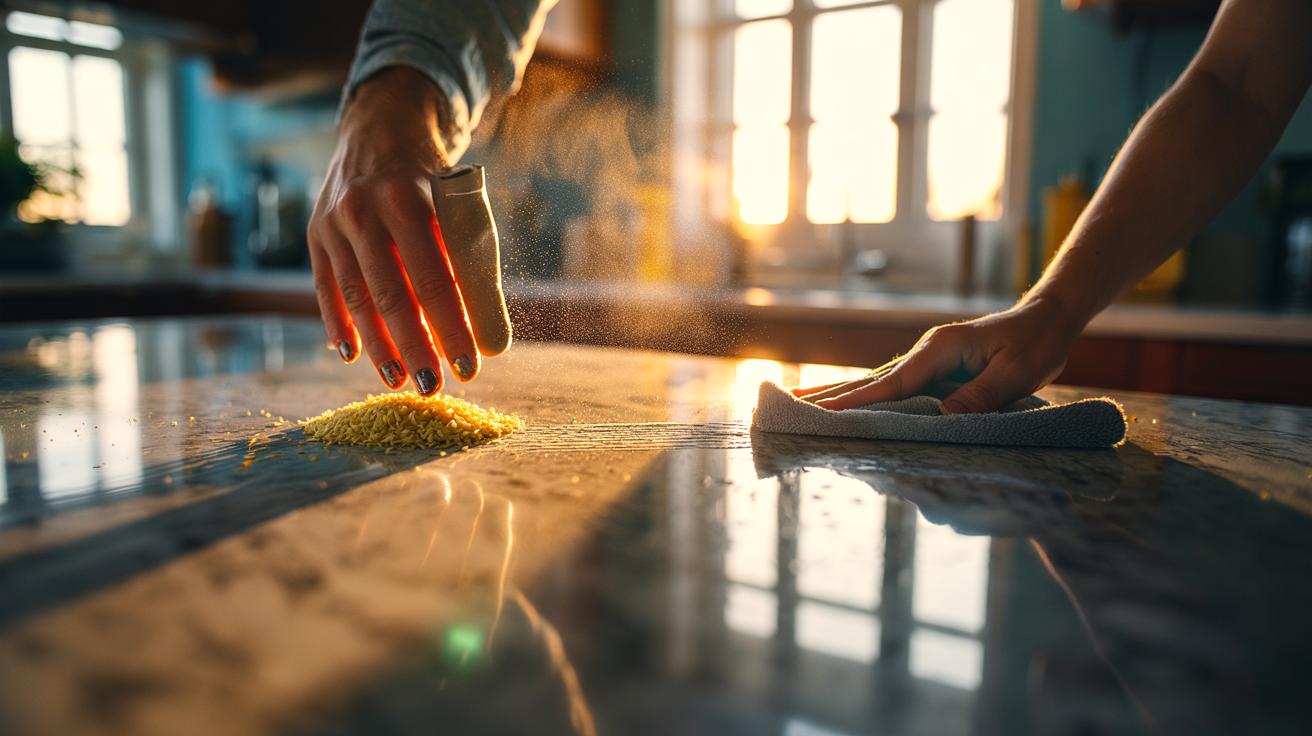
Start with a clean, dry surface—no puddles, no fresh spills. Sprinkle a teaspoon or two of plain rice bran into your palm, then dust it over the smudged area like flouring a board. Aim for a translucent scatter, not a snowdrift. With your fingers or a soft, dry cloth, gently sweep the bran back and forth. Light pressure only, a few passes. You’re encouraging contact, not polishing. Set a timer for five minutes if you’re doing a big run—this is genuinely quick.
Now the wipe-away: take a dry microfiber cloth and remove the bran in overlapping strokes. You’ll feel it go from soft drag to a lighter glide as the smudge lifts. If a faint matte bloom remains, switch to a barely damp microfiber, wipe once, then immediately finish with a dry corner for a streak-free look. No buffing is required for shine when the residue has been properly taken up. For stainless handles or appliance doors, target fingerprints first, wipe, and move on—short, confident passes beat frantic circles. Dispose of used bran; don’t rinse it into sinks with delicate traps.
Surfaces, Safety, and What to Avoid
Rice bran is gentle, but not universal. The rule is simple: always test in an inconspicuous spot first. On sealed stone (granite, quartz), stainless steel, ceramic, glass, and most laminates, it shines—literally. On unsealed marble or limestone, dry particles can lodge in pores and dull the patina. Soft acrylics and high-gloss lacquers demand feather-light pressure. Watch for food-contact areas: bran is food-adjacent, yet you still want a clean, dry removal so nothing lingers that could go rancid over days. Keep it away from hot hobs and any open flame; it’s an organic powder.
| Surface | Notes |
|---|---|
| Stainless steel | Excellent for prints; wipe with grain. Dry finish for best shine. |
| Quartz and sealed granite | Safe when dry; follow with light damp wipe and dry cloth. |
| Laminate | Gentle and effective; avoid wet paste. |
| Glass splashbacks | Use very little; finish with damp then dry wipe to prevent speckling. |
| Unsealed marble/limestone | Use caution; particles may lodge. Test first or avoid. |
| Oiled wood | Can absorb oil; test and remove thoroughly. |
If you have rice allergies, use gloves and avoid aerosolising dust. Store bran airtight; if it smells “fatty,” it’s oxidising—replace it. Clean, fresh bran performs best and leaves the least trace.
Comparisons and Cost: Bran vs. Sprays and Powders
Traditional kitchen sprays rely on surfactants or silicone-like agents to make things look glossy. They often leave a faint film that attracts dust, creating that wipe-again cycle by midweek. Rice bran leaves no synthetic residue, so you get clarity without a cling. Baking soda is a classic, yet its crystalline edges can feel gritty and scratch-prone on softer finishes; bran’s micro-milled texture is kinder. Chalk-based powders polish well but can streak and demand buffing. Bran removes the need to buff because it lifts rather than layers.
There’s a budget story too. A small bag of culinary rice bran costs pennies per use, and a teaspoon goes surprisingly far. Because it’s a by-product of milling, it leans low-waste and compostable once spent. No fragrance, no dyes, and no propellants. For renters juggling deposit-friendly cleaning, that matters. Performance-wise, it won’t replace degreasers for baked-on grime, yet for everyday fingerprints, haze, and oily bloom, it’s fast and repeatable. The rhythm becomes simple: dust, wait, wipe, admire. The absence of buffing is the win; your cloth and shoulders will thank you.
There you have it: a five-minute, no-buff route to counters that actually look clean in daylight, not just perfumed. Rice bran’s fine texture and oil affinity make smudges surrender without heavy effort, leaving metal, glass, and sealed stone bright. It’s thrifty, quiet, and oddly calming to use. Will you try a teaspoon on the worst fingerprints first, then scale up once you see the difference—or will you pit it against your usual spray on a single cabinet door and see which side wins?
Did you like it?4.6/5 (23)