In a nutshell
- 🧪 The five-minute magic comes from acetic acid (≈5%) lowering pH to loosen alkaline residues, tannins, and mineral films, wicking into fibres fast and leaving no sticky residue.
- 🧼 Quick method: blot, don’t rub; apply a 1:1 white vinegar:cool water mix; allow 3–5 minutes dwell; gentle agitate, rinse and dry swiftly—always patch-test on a hidden spot first.
- ☕ Best targets: fresh coffee/tea, pet urine, mud, light grease, with clear ratios and contact times; safer on synthetics, go milder on wool blends; keep airflow to prevent wick-back.
- ⚠️ Limits and risks: avoid repeated use on wool/silk and natural stone; not for oil-based paint, tar, heavy grease; never mix with bleach (toxic gas) or neutralise with baking soda.
- 🛠️ Pro tips: work edges inward, use tamponing, finish with pile grooming; pair vinegar with a drop of mild detergent for greasy food, follow with enzymatic cleaners for proteins, and prioritise fast drying.
It sounds like kitchen folklore, yet in homes across Britain a bottle of clear, tangy liquid is rescuing carpets in minutes. Vinegar, specifically white distilled vinegar, has become the go-to for people who don’t want harsh chemicals but do want fast results. The secret is chemistry, not magic. When a stain is fresh, every second counts; hit it right and it lifts, hesitate and it sets. With vinegar, contact time is short, the tools are basic, and the win can be dramatic. Five minutes often beats scrubbing for half an hour, leaving fibres brighter and odours muted.
The Chemistry Behind the Five-Minute Fix
The engine inside vinegar is acetic acid, typically around 5% in household bottles. At a low pH of roughly 2.4, it disrupts the chemistry holding many stains in place. Alkaline residues from coffee, tea, mud, and detergent react quickly, softening and re-solubilising within minutes. Acetic acid also chelates metal ions, loosening mineral films that bind dirt to fibres. That’s why it can dislodge the grey “shadow” left after a spill appears gone. Lower the pH briefly and old bonds break.
Vinegar’s small molecules wick into pile easily, moving by capillary action where bulkier cleaners stall. And while it’s not a surfactant, it reduces static and helps water penetrate, which matters in synthetic carpets prone to holding onto fine soils. Equally crucial, acetic acid neutralises smelly alkaline residues, so pet odours fade as staining does. In practice, the five-minute window is a sweet spot: long enough for ion exchange and dissolving to work; short enough to avoid prolonged saturation that can wick stains deeper.
There’s another quiet advantage. Vinegar doesn’t leave a sticky film. Many carpet shampoos do, inviting rapid re-soiling. A water rinse afterwards removes acidity, but even without, dried acetic acid leaves minimal residue. Fast in, fast out, and no tacky aftermath—that’s why the results look clean rather than merely perfumed or temporarily brightened.
How to Use Vinegar on Common Carpet Stains
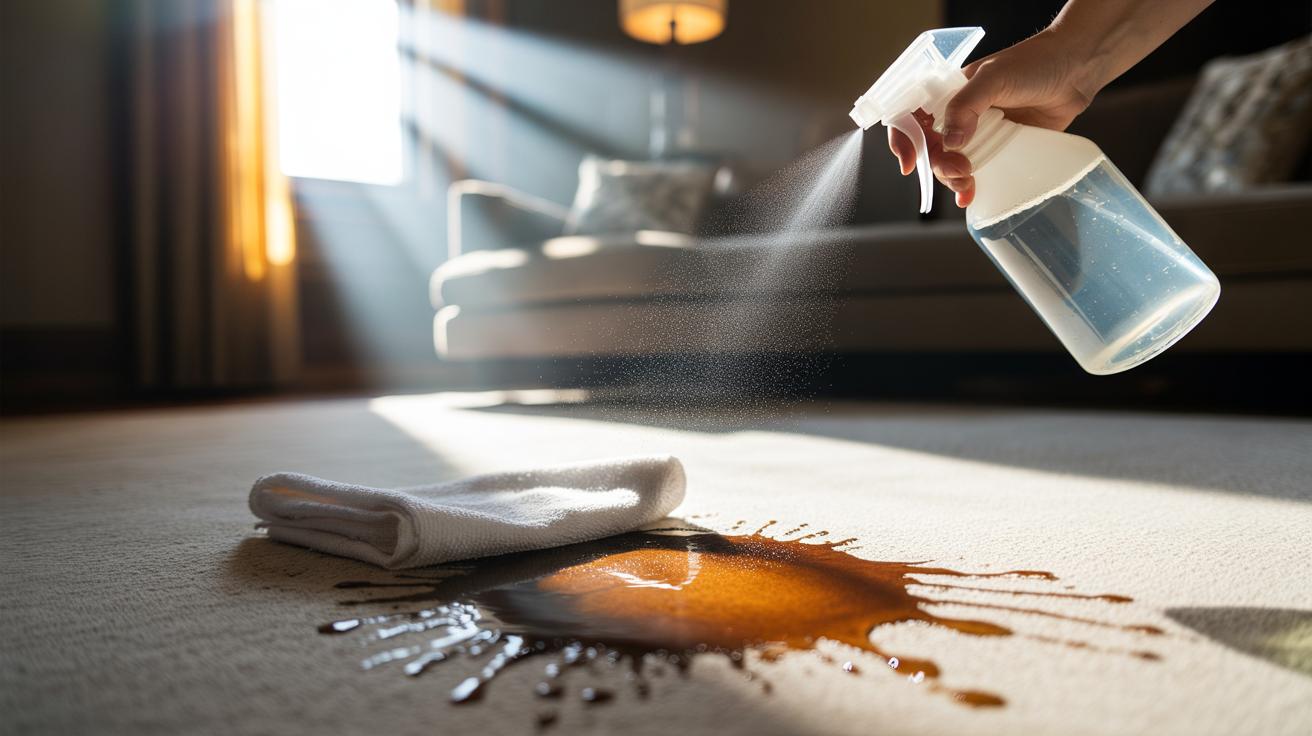
Speed beats force. Start by blotting—press, don’t rub—with a white, lint-free towel to remove excess liquid. Mix a solution of 1:1 white vinegar and cool water for most fresh stains. Lightly mist or dab; never flood. Allow up to five minutes of dwell time. Agitate gently with the towel, then blot dry. Finish with a small amount of clean water to rinse and blot again. Always patch-test in a hidden spot first to check for colourfastness and texture changes.
| Stain Type | Why Vinegar Works | Mix Ratio | Contact Time | Blot/Rinse Notes |
|---|---|---|---|---|
| Coffee/Tea | Acid neutralises alkaline brew residues and tannins loosen | 1:1 vinegar:water | 3–5 minutes | Blot, light rinse, blot dry |
| Pet Urine (fresh) | pH shift cuts odour and breaks salts | 1:1 vinegar:water | 5 minutes | Blot thoroughly; repeat once if needed |
| Mud/Soil | Dissolves alkaline residues binding fine particles | 1:1 vinegar:water | 2–4 minutes | Vacuum dry mud first; minimal rinse |
| Light Grease | Lowers surface tension; aids lift with towel | 1:2 vinegar:water | 3 minutes | Use warm (not hot) water rinse |
For synthetic carpets (polypropylene, nylon), vinegar is typically safe when used sparingly. Use smaller amounts on wool blends, and avoid heat. If a stain is sugary—spilled cola or juice—apply vinegar, blot, then rinse well to prevent sticky residue. Keep airflow moving with a fan so the carpet dries quickly, which stops brown wicking lines appearing hours later.
When Vinegar Isn’t the Answer: Risks and Limits
Some fibres and stains shrug at acidity or are damaged by it. Wool and silk carpets can felt or lose sheen with repeated acid exposure. Use a milder mix (1:3 vinegar:water), and keep contact short. Avoid vinegar on or near natural stone thresholds and tiles—acids etch limestone and marble. Bright, unstable dyes can also bleed; that’s why the patch test matters. If colour transfers to your white towel, stop and consult a pro.
Certain stains are poor candidates. Oil-based paints, nail varnish, tar, and heavy grease typically require solvent-based removers, not acids. Rust may lighten with acid but risks fibre damage and can spread; specialist rust removers are safer. Set-in, oxidised stains may need oxygen-based bleaches formulated for carpets. Resist the urge to create chemistry experiments in the lounge. Never mix vinegar with bleach; it releases toxic chlorine gas. Pairing vinegar with baking soda is dramatic but counterproductive: fizzing neutralises both, leaving salty water and less cleaning power.
If a rug has a latex or rubber backing, over-wetting with any solution can degrade it. Keep applications minimal and blot aggressively. Odour sources that have penetrated underlay—older pet accidents—won’t fully surrender to surface treatment; those need sub-surface extraction or pad replacement. The rule of thumb is simple: vinegar is a first response for fresh, water-based spots, not a universal eraser.
From Pantry to Professional: Pairing Vinegar With Smart Technique
Technique turns a bottle into a tool. Work from the outside edge of a stain inward to avoid spreading. Use multiple clean sections of a white towel so you see transfer clearly. For delicate fibres, swap vigorous rubbing for tamponing: press, lift, rotate, repeat. After the five-minute dwell, follow with a light rinse, then stack dry towels and stand on them to pull moisture up. Drying fast prevents reappearance.
For greasy-food spills, add a single drop of a mild, dye-free dish liquid to your vinegar solution to introduce a touch of surfactancy, then rinse thoroughly to avoid residue. Treat odours by applying vinegar solution, then, once dry, vacuum and apply an enzymatic cleaner if proteins remain. Finish with grooming: brush the pile in its natural direction so the cleaned area blends. If you own a wet extraction machine, use vinegar solution as a targeted pre-spotter, not the tank mix, and always flush with plain water.
Finally, think prevention. Use doormats, vacuum weekly with a strong beater bar, and address spills immediately. A quarterly low-moisture professional clean keeps soils from binding to fibres, making that five-minute vinegar fix even more reliable. The combination of correct chemistry and calm, quick action is what delivers those “after” photos.
Vinegar won’t replace every product in your cupboard, but as a rapid-response stain eraser it punches far above its price, especially on fresh, water-based messes that would otherwise set. Use it with restraint, respect fibre limits, and dry fast. In most homes, that’s enough to turn panic into process and save a Saturday. Where could a smarter five-minute routine—blot, apply, wait, blot, rinse, dry—rescue your carpets next, and what would you like to test it on first?
Did you like it?4.5/5 (26)