In a nutshell
- 🍌 Overnight peel tea delivers quick-release potassium to boost flowering and fruiting; speed comes from soluble ions, not instant decomposition.
- 🧪 Three methods: compost tea (soak 8–12h, dilute 1:1–1:2), trench composting (chop and bury 10–15 cm), and dried peel mulch (air/oven-dry, crumble)—each balances speed, convenience, and pest risk.
- 🌹 Best for tomatoes, roses, peppers, courgettes, strawberries, and container citrus; avoid relying on peels for nitrogen-hungry crops or seedlings; monitor K levels to prevent magnesium antagonism.
- 🦠 Microbial pulse: sugars feed soil microbes, enhancing nutrient cycling and soil structure; peels add carbon that improves tilth and water retention beyond the immediate K boost.
- ⚠️ Practical safeguards: bury or strain to deter pests, avoid foliar spraying, rinse non-organic skins, and pair with compost and balanced fertilisers; run small A/B trials to verify gains.
Bananas aren’t just breakfast. In British gardens from terrace pots to allotment beds, the humble peel is quietly becoming a fast-acting soil booster. Many growers swear by an overnight soak that turns kitchen scraps into a quick potassium tonic. The promise is simple: feed flowers and fruit without pricey bottles or synthetic salts. But what actually happens in the soil, and how do you avoid attracting slugs, foxes, or fruit flies? Here’s a clear, practical guide, grounded in horticultural science and trialled techniques, to help you use banana peels for rapid results—safely, cleanly, and with a journalist’s eye for what truly works. Done right, peels can strengthen plants by morning.
Why Banana Peels Feed Soil Fast
Banana peels are famously rich in potassium, a nutrient plants use to regulate water movement, strengthen cell walls, and power flowering and fruiting. While whole skins don’t disappear overnight, some of their water‑soluble potassium ions diffuse quickly into water and moist soil. That’s the crux: speed comes from solubility, not from instant composting. It’s the readily available potassium that gardeners notice first. Peels also contribute modest phosphorus and calcium, with traces of magnesium and micronutrients. These support root development and resilience under stress, including drought and disease pressure.
The biological story matters. When chopped or brewed, peels present a soft, sugar‑rich surface for soil microbes, which wake up and cycle nutrients. As microbes metabolise peel sugars, they release enzymes and acids that help free minerals already in your bed, amplifying benefits beyond the peel itself. That microbial pulse is short but useful after a storm or a heavy watering. Keep expectations realistic: a single peel won’t replace a balanced feed. Think of it as a targeted boost that complements compost and slow‑release fertilisers, especially during bloom and fruit set.
Overnight Methods: Teas, Trench Composting, and Mulch
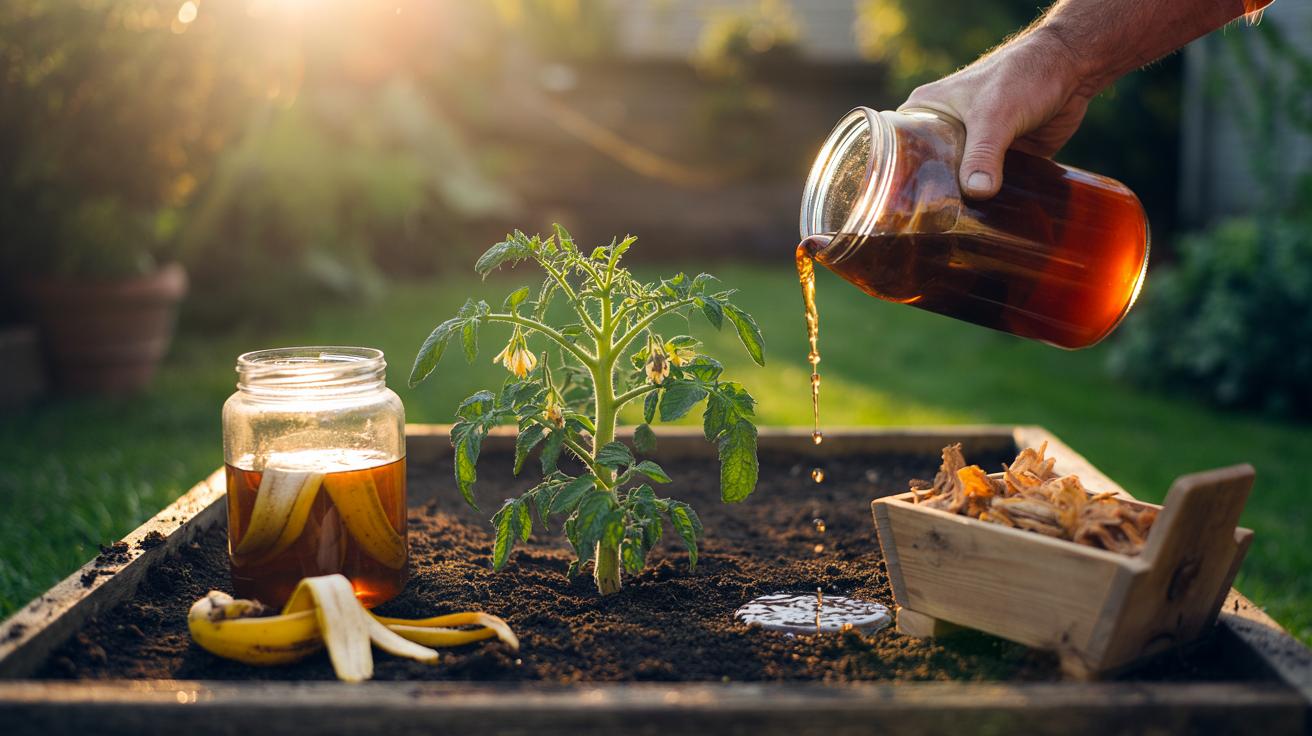
For speed, make a simple compost tea from peels. Rinse one to two peels, slice into strips, and submerge in one litre of clean water. Weigh them down. Steep 8–12 hours at room temperature, then strain. Dilute 1:1 for containers, 1:2 for beds, and water around the root zone. Avoid foliar spraying to reduce sticky residues and pests. The leftover peel can be chopped and buried 10–15 cm deep along a planting trench to deter scavengers. If odour worries you, dehydrate strips in a low oven or air‑dry on a sunny windowsill, then crumble as a light mulch and water in.
Problems often come from whole skins tossed on the surface. They attract foxes, rats, and slugs, and they can turn slimy in cool UK weather. Keep air involved: thin pieces, proper depth, and moisture control prevent anaerobic stink. Add a pinch of rock dust or finished compost if you have it; this buffers pH and seeds beneficial microbes. Never seal peels in airtight jars for “ferments” without guidance—that’s a recipe for off‑gassing and foul brews. For households, a weekly batch night—Thursday, before weekend gardening—fits naturally with a watering routine.
| Method | How | Speed | Best for | Pest risk |
|---|---|---|---|---|
| Peel tea (overnight) | Soak strips 8–12 h, dilute, drench soil | Fast (hours–days) | Tomatoes, roses, containers | Low if strained |
| Trench compost | Chop and bury 10–15 cm deep | Medium (2–4 weeks) | Vegetable rows, perennials | Low if buried |
| Dried peel mulch | Air/oven‑dry, crumble, water in | Medium (days–weeks) | Border edges, herbs | Low–moderate |
What Plants Benefit, and What to Avoid
Plants that respond brilliantly to a potassium lift include tomatoes, peppers, roses, courgettes, and strawberries. You’ll often see sturdier stems, tighter buds, richer petal colour, and more consistent fruit size. Container citrus and fuchsias also appreciate a gentle K nudge between regular feeds. For leafy veg like lettuce or spinach, peels help indirectly by improving stress tolerance, but they won’t supply the nitrogen surge those crops crave. Don’t rely on peels alone for seedlings or hungry brassicas; pair with a balanced, peat‑free fertiliser or well‑made compost.
Where caution pays: slug‑magnet beds, indoor houseplants, and wildlife‑heavy plots. Surface peels invite slugs and rodents, so always bury or brew. Indoor use can spark fungus gnats if the mix sits wet; apply strained tea sparingly and let compost dry slightly between waterings. If your soil is already high in potassium—common in some urban beds—avoid overdoing it, which can antagonise magnesium uptake and show as leaf yellowing between veins. Rinse non‑organic peels to remove handling residues. When in doubt, small, repeated doses beat a single, soggy dump, and your soil biology will thank you.
Science and Soil Health: From Microbes to Minerals
Peels carry a moderate carbon load and a relatively low protein fraction, landing roughly in the mid‑range for C:N compared with other kitchen scraps. Chopped into soil, they feed fast‑cycling bacteria first, then fungi, which stitch carbon into longer‑lived aggregates. That improves tilth, water holding, and root aeration—quiet gains that outlast the immediate potassium pulse. In tea form, the liquid extracts ions and small organic acids; pH typically hovers near neutral, gentle enough for most UK tap water contexts. This is why an overnight brew feels “quick”—the chemistry is already plant‑ready.
Scale matters. One peel contains limited K—useful for a pot or a square foot, not a whole plot. Treat peels as a precision tool alongside compost, leafmould, and slow‑release organics. For integrated pest management, burying keeps smells down and deters scavengers; adding a handful of mature compost inoculates with microbes that outcompete pathogens. Environmentally, you’re diverting waste from bins and building soil capital. If you crave certainty, conduct a small A/B trial: two similar pots, one with peel tea, one without, and note flowering time and fruit set over a fortnight. The differences are often small but real.
Used thoughtfully, banana peels are a nimble way to tighten the nutrient loop in your garden. An overnight tea delivers a quick potassium bump, while chopped or dried skins feed your soil microbiome and structure in the weeks ahead. Keep it tidy, keep it buried or strained, and keep it complementary to balanced fertilisers. Fast doesn’t have to mean sloppy, smelly, or risky. What will you try first this week: a carefully diluted brew for your roses, a discreet trench along the tomato row, or a small side‑by‑side test to see the difference with your own eyes?
Did you like it?4.5/5 (25)