In a nutshell
- 🍺 The quick glow explained: diluted beer adds water, mild sugars, trace nutrients, and natural surfactants that boost sheen and uniformity, delivering a lush, vibrant look within about 10 minutes.
- 🔬 What changes fast: instant rehydration lifts blades, optical smoothing reduces light scatter, and cleaner colour contrast makes green pigments pop—an immediate visual effect, not new growth.
- ⚖️ Safe method: use flat/non-alcoholic beer at 1:10–20 dilution, apply as a light mist (not a soak) with a fine rose or hose-end sprayer; target early morning or late afternoon and test a small patch first.
- 🚫 Caveats and myths: beer isn’t a full feed—missing sustained N‑P‑K; avoid sticky build-up and potential scorch; hops don’t kill grubs, and alcohol neat is harmful—dilution is essential.
- 🌱 Smart use: treat beer as a pre-event polish for quick curb appeal, then prioritise fundamentals—soil health, proper mowing height, aeration, overseeding, and a balanced fertiliser plan guided by a soil test.
It sounds like folklore. It isn’t. Home gardeners across the UK are reaching for a leftover bottle of beer to perk up a tired lawn, claiming a lush, vibrant look in minutes. The trick isn’t mystical yeast elves. It’s chemistry, optics, and a little plant physiology. Water, mild sugars, trace nutrients, and natural surfactants combine to make grass blades look richer, glossier, more upright. The effect is visual and short-term, but it’s real enough to turn heads before a barbecue or house viewing. Used thoughtfully, beer becomes a quirky, low-cost tool in your lawn care kit—one that complements, not replaces, good soil management.
What’s in Beer That Grass Likes
Strip away the marketing and a bottle of beer is a dilute soup of water, sugars (from malt), trace minerals, a smidge of protein/peptides, and sometimes residual yeast. On contact, these compounds act like a mild foliar tonic. Sugars cling to the cuticle, increasing sheen. Small peptides and B-vitamins feed the living film of microbes around the blade surface, which in turn can aid nutrient cycling. Meanwhile, natural surfactants reduce surface tension, so droplets spread instead of beading. The outcome looks like fresh paint—light catches evenly, colour seems deeper, and the sward reads as more uniform from kerbside distance.
That said, alcohol and excess salts can stress turf if applied neat. The solution is simple: dilute. Choose flat or low-alcohol beer so blades get the wetting and cosmetic benefits without the burn. Think of it as a soft-focus filter for grass, not a fertiliser bomb. Below is a quick snapshot of what’s helping—and what might harm—if you overdo it.
| Beer Component | Potential Lawn Benefit | Risk If Overused |
|---|---|---|
| Water | Rapid rehydration; improved leaf turgor | None |
| Sugars (maltose) | Shine; microbe stimulation | Sticky residue; ants |
| Surfactants | Better wetting; even coverage | Leaf spotting if concentrated |
| Yeast/B vitamins | Microbial boost; trace nutrition | Odour; fungal interest if damp |
| Alcohol | None for plants | Desiccation; scorch |
How the 10-Minute Glow Actually Happens
The “10-minute” promise hinges on three fast processes. First, rehydration: a light mist restores leaf turgor, making blades stand taller and reflect light like healthy fibres. It’s instant, like a face mist on a hot day. Second, optical smoothing: sugars and surfactants create a thin film, reducing the micro-roughness that scatters light. The turf reads darker and richer, even though the chlorophyll hasn’t changed. Third, colour contrast: dust and pollen are temporarily pinned down, so green pigments visually dominate. From a patio or window, it pops.
There’s also a subtle physiological nudge. A mild foliar feed—even trace-level—can briefly reduce plant stress signalling, especially after mowing. The lawn looks less “ruffled”. But let’s be clear: you’re not growing new tissue in 10 minutes, you’re optimising appearance. Expect hours of improved look, sometimes lasting to the next dew or shower. If the soil is poor or the lawn is disease-stressed, the glow will be modest. If the turf is already well-fed and evenly cut, the effect can seem startlingly good.
A Safe, Simple Method You Can Repeat
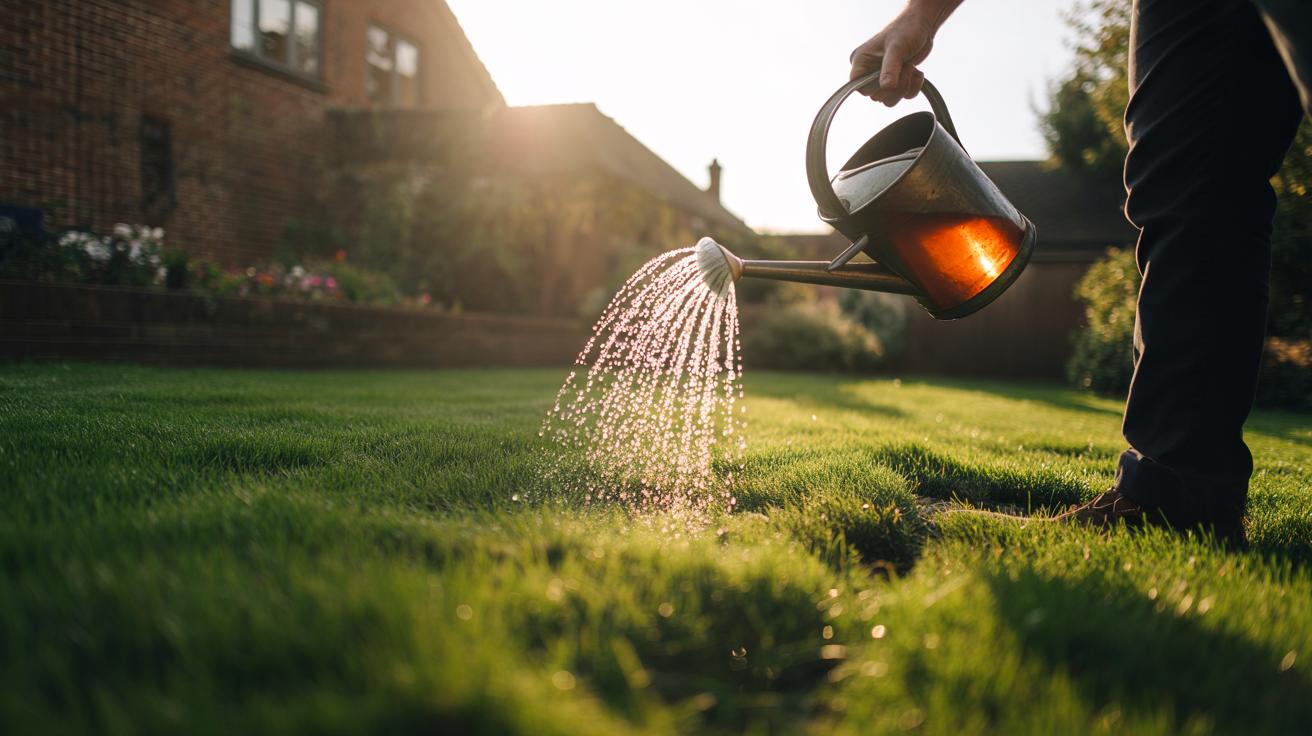
Reach for flat, room-temperature beer. Non-alcoholic is best. If using regular beer, let it go flat and cut it hard with water. A reliable ratio: 1 part beer to 10–20 parts water. This protects against scorch and stickiness while keeping the surfactant and sugar benefits. For a small lawn, a watering can with a fine rose gives even coverage. For larger areas, a hose-end sprayer set to a weak feed is ideal. Lightly mist, don’t soak. You want a film, not puddles.
Timing matters. Apply in early morning or late afternoon on a mild, still day. Avoid heatwaves and direct midday sun to reduce scorch risk and evaporation. Mow 24 hours beforehand for cleaner presentation, then brush away clippings so the film reaches leaves. Pets? Keep them off until dry to prevent licking. If ants are common, rinse lightly with plain water after 20–30 minutes to minimise residue while keeping the initial gloss. Always test a small, hidden patch first to gauge your grass type’s tolerance.
Caveats, Myths, and Smart Timing
Beer isn’t a miracle fertiliser. It contains trace nutrients, not the sustained N-P-K profile lawns need across a season. For long-term health, combine this hack with aeration, overseeding, and a balanced fertiliser schedule tailored to your soil test. Beware sticky build-up. Weekly soaks encourage pests and fungi. Think of beer as a pre-event polish, used sparingly—perhaps before guests arrive or a photo day—rather than a routine feed. If you notice blotching, increase dilution or switch to non-alcoholic varieties.
Another myth: hops kill grubs. There’s no credible evidence for that at lawn-ready concentrations. What does hold up is the cosmetic uplift and slight microbial priming on the leaf surface. And yes, water alone perks grass, but beer’s wetting action and sugars amplify the effect, especially on hydrophobic patches that shed droplets. Do not pour straight, boozy beer on turf; it’s wasteful and risks scorch. Used with restraint and a gardener’s eye, the 10-minute glow becomes a reliable, reversible trick—one that won’t compromise your next proper feed or treatment.
Beer on a lawn feels cheeky, yet used wisely it’s simply targeted wetting plus a mild foliar finish. The result is a richer tone, a cleaner sheen, and blades that stand a touch prouder—ideal for quick wins when presentation counts. Then you return to fundamentals: healthy soil, correct mowing height, measured feeding. That’s the real engine of resilience and colour. Will you try a diluted, flat-beer mist on a small test square this weekend and see whether your turf delivers that instant glow, or will you devise your own pre-party lawn polish routine?
Did you like it?4.3/5 (27)