In a nutshell
- 🍝 Salted water transforms texture and taste: firmer gluten network, tempered surface gelatinisation, intrinsic seasoning, and better sauce cling for true al dente.
- 🧂 Use a professional ratio of 1–2% salinity—that’s 10–20 g/L; measure by grams, match salinity to the sauce, and prefer fine sea salt for consistency.
- ⏱️ Technique rules: add salt after the boil, use ~1 L per 100 g pasta, stir early and often, finish in sauce for 60–90 seconds, and emulsify with starchy pasta water.
- 🧪 Control the cook: manage carryover cooking, lower pot salinity for salty ingredients, and restore balance with butter, lemon, or blanched greens if needed.
- 🔥 Practical payoffs: cleaner, less cloudy water, faster boil recovery, a glossy sauce coat, and reliably restaurant-quality results at home.
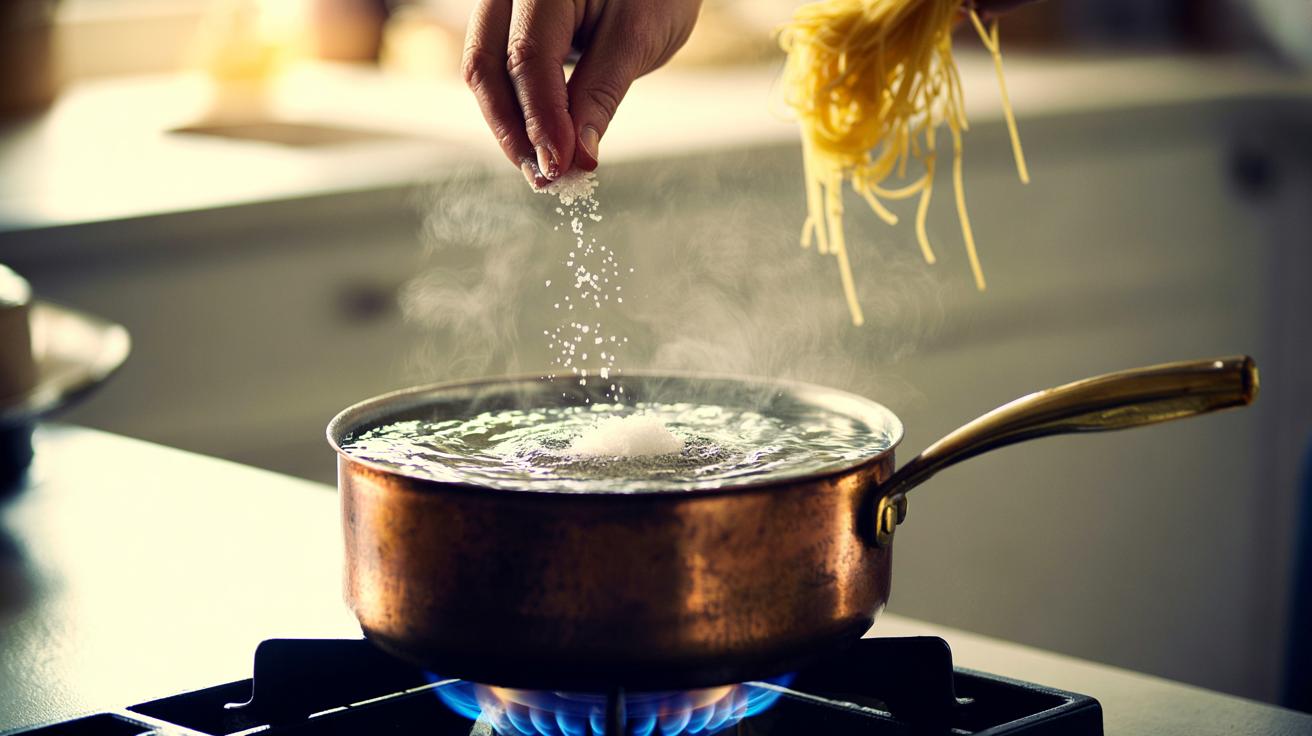
Boiling pasta in plain water is like playing a symphony with the volume turned down. Add salt and the whole piece comes alive, nuanced and resonant, as if a chef in a white jacket is standing over your hob. Salting the pot is not garnish; it is technique. When those crystals hit boiling water, they do more than make things taste “salty”. They reshape texture, accelerate aroma perception, and set up your sauce to shine. Think of it as building a smart, shallow brine—one that seasons from within while supporting that coveted al dente bite. Small move. Huge return.
Why Salted Water Transforms Texture and Taste
Salt changes the physics of your pot. In a lightly salted bath, pasta absorbs water a touch more slowly, which keeps the gluten network firmer and the exterior from sloughing into mush. The starches still swell, but less aggressively; surface gelatinisation is tempered. Result: cleaner edges, a satisfying bite, and less cloudy water. That cleaner water matters because it leaves you with a silkier, not gummy, emulsion when you marry pasta and sauce.
There is also chemistry you can taste. A modest rise in boiling point keeps the pot rolling, meaning noodles cook more evenly and return to a boil faster after you drop them in. More importantly, sodium ions amplify flavour—salt doesn’t just add saltiness, it brightens acidity, rounds bitterness, and pushes fragrance forward. Salted water seasons the pasta itself, not only the sauce, so every strand or shell carries flavour all the way through.
That intrinsic seasoning has a practical knock-on effect: sauces need less aggressive reduction or last-second salting. A tomato sugo tastes sweeter. A butter emulsion feels richer. And because the pasta’s outer layer is better managed, those sauces cling, forming a glossy coat rather than sliding off in a puddle. Call it subtle engineering, achieved with a spoonful of crystals.
How Much Salt: The Ratios Restaurants Rely on
Forget the myth that pasta water should “taste like the sea”. You’re not poaching fish. Professional kitchens typically target 1–2% salinity by weight—simple, predictable, delicious. That means 10–20 g of salt per litre of water. Use scales; volume spoons vary wildly between table, kosher, and sea salts. Measure by grams, not by guesswork. Start at 1% for delicate sauces or stuffed pasta, nudge to 1.5% for everyday cooking, and go near 2% if you’re pairing with big flavours or finishing noodles quickly in the pan.
| Salt Concentration (%) | Salt per Litre (g) | Approx. Boiling Point Increase (°C) | Taste Cue |
|---|---|---|---|
| 0.5% | 5 g | ~0.09 | Very light seasoning; delicate fillings |
| 1.0% | 10 g | ~0.18 | Classic everyday balance |
| 1.5% | 15 g | ~0.26 | Restaurant-forward savouriness |
| 2.0% | 20 g | ~0.35 | Bold sauces, brief finishing time |
Match salinity to the sauce. Rich ragù, anchovy, or pancetta-heavy condiments appreciate 1–1.2% so you don’t double up on sodium. A simple aglio e olio or lemon butter sings at 1.5%. If your sauce includes salty ingredients—olives, capers, aged cheese—dial the pot down and finish seasoning in the pan with a splash of starchy pasta water. Fine sea salt dissolves fast and reads clean; flaky salts look pretty but measure inconsistently. For consistency, choose fine sea salt or a predictable kosher brand and stick with it.
Timing, Technique, and Tools for Consistent Results
Bring water to a vigorous boil before salting. Add salt after the boil and stir until fully dissolved to protect your pan and ensure even seasoning. Use plenty of water—roughly 1 litre per 100 g of pasta—so temperature rebounds quickly and starch concentration stays manageable. Keep the lid on to accelerate boiling; remove it after the pasta goes in to prevent overflow and allow steady evaporation, which subtly concentrates flavour.
Stir early and often. The first minute is when sticking happens, as noodles shed starch and begin to set. Taste at the earliest package time and every 30 seconds thereafter. You’re hunting for al dente: a tender exterior with a faint core that yields. Finish the last 60–90 seconds in the sauce, loosening with ladles of that glossy, salty-sweet pasta water to build an emulsion that clings. The goal is a sheen, not a puddle.
Think like a pro about carryover. Pasta continues to cook off the heat, especially in hot sauce. Remove it a shade underdone and let the sauce do the last stretch. If you need a quick fix for under-salted pots, season your sauce judiciously and rely on a splash of reduced pasta water. If you’ve gone too far with the salt, add unsalted butter, a squeeze of lemon, or a handful of blanched greens to restore balance.
Salt is the quiet conductor of pasta night, setting tempo, texture, and taste before sauce even hits the pan. With a measured hand and a clear plan—salinity in the 1–2% window, salt added at the boil, finishing in sauce—you trade guesswork for repeatable brilliance. Master the pot and every plate gets better, from weeknight penne to Saturday-night spaghetti alle vongole. Which ratio will you reach for first, and how will you tune it to your favourite sauce?
Did you like it?4.7/5 (23)