In a nutshell
- 🥑 The plate-and-lemon trick creates a gentle microclimate that concentrates ethylene, nudging almost-ripe avocados to a pleasing softness by morning.
- 🍋 Step-by-step: choose firm-but-near-ready fruit, add lemon wedges on a plate, cover with a bowl dome, leave overnight, and test near the stem; do not cut first.
- ⚖️ Method comparisons: the lemon dome is tidy and mild; a paper bag + banana is faster for hard fruit; rice burial is slower; oven/microwave does not truly ripen.
- ⚗️ Science & safety: avocados are climacteric; keep them whole to ripen, avoid damp, and refrigerate once ripe to pause the process and protect texture.
- ✅ Practical takeaway: use the lemon dome for nearly ripe avocados, or supercharge with a banana when you need extra ethylene for a more reliable overnight result.
You’ve bought the avocado too soon. You need guacamole by tomorrow. Cue the internet’s latest kitchen whisper: the plate-and-lemon trick. It sounds like alchemy, but the principle rests on the fruit’s own biology. Create a tiny dome of warm air, whisper in a hint of citrus, and let ethylene do the heavy lifting. The goal isn’t magic; it’s a microclimate. Simple. Inexpensive. Surprisingly effective for impatient cooks. With the right setup, many readers report a pleasing give by morning, especially when the fruit was already close to ripe. Here’s how it works, why it works, and when to use something even faster.
How the Plate-and-Lemon Hack Works
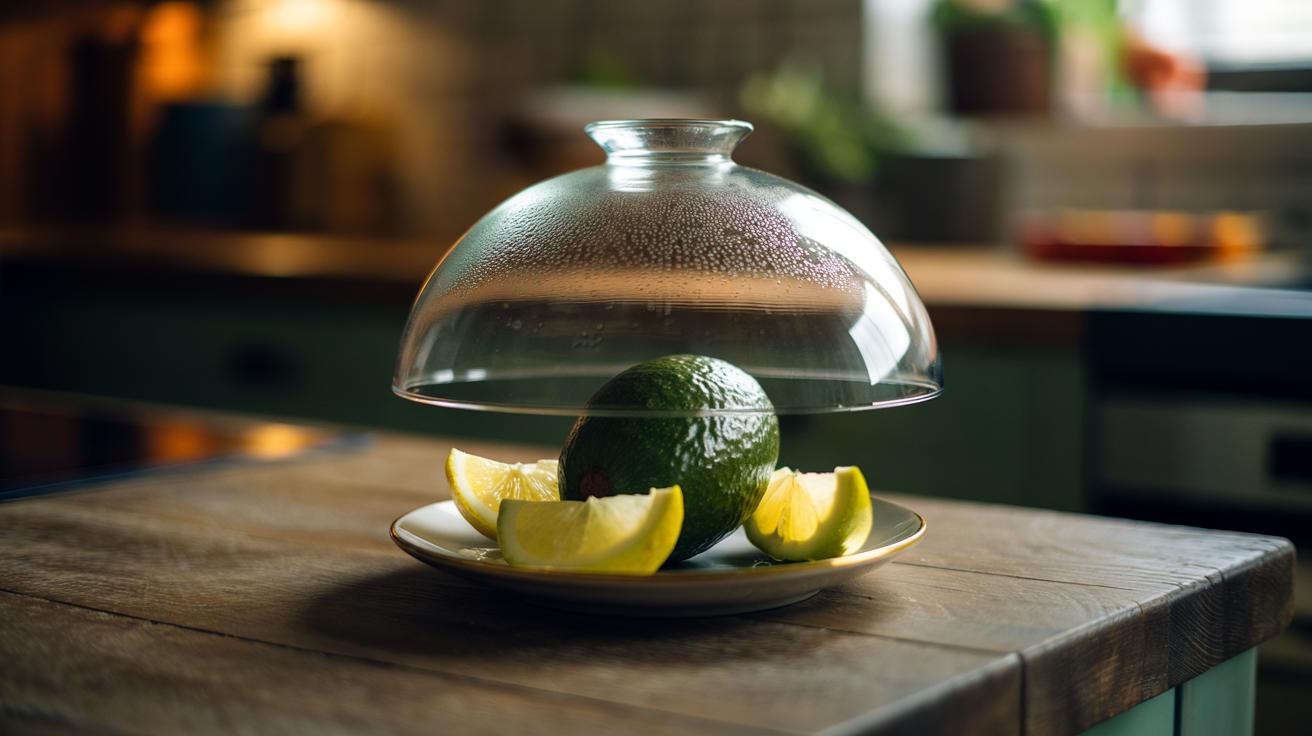
Avocados are climacteric fruit. They ripen after harvest by producing ethylene, a natural plant hormone. The trick is to nudge that process along safely. The plate-and-lemon method creates a gentle microclimate: place a whole avocado beside cut lemon on a plate, then cap with a bowl. The dome traps humidity and a small amount of ethylene, keeping the fruit slightly warmer while minimising drafts that cool the surface. Lemons themselves emit little ethylene compared with bananas or apples, but they do help maintain a clean, aromatic space that discourages musty odours.
Do not cut the avocado first—cut fruit won’t ripen properly. Keep it whole, stem on if possible, so internal chemistry can complete that final push. Overnight shifts happen fastest when the avocado is nearly there already: firm but not rock-hard, darker skin, and a hint of give at the stem. Kitchen temperature matters too. A cosy worktop speeds things up; a chilly windowsill doesn’t. Expect subtlety, not sorcery. If it’s very under-ripe, plan for a second night or move to a higher-ethylene partner, like a banana in a paper bag.
Step-by-Step: Set It Up in 60 Seconds
1) Choose the right fruit. Pick an avocado that’s still firm, yet shows a little resilience near the stem. Bright green and bullet-hard? You’ll need patience or a stronger method.
2) Slice a lemon into two or three wedges or rounds. The citrus keeps the air fresh and slightly humid. No lemon? Lime works similarly.
3) Put the whole avocado and lemon pieces on a small plate. Don’t stack or crowd; proximity is enough for the microclimate to form.
4) Cover with an upturned bowl or saucepan to form a dome. You’re aiming to trap warmth and ethylene, not vacuum-seal it. A neat fit is good; airtight is unnecessary.
5) Leave on the counter, away from direct sun and hobs. Overnight is ideal. Warmer rooms accelerate the shift.
6) Check in the morning. Press gently near the stem. A slight, even give? You’re good. Still firm? Replace the bowl and lemon for the evening. Once ripe, store in the fridge to stall ripening for two to three days.
7) Need halves later? When you do cut, brush the surface with lemon juice to slow browning and wrap tightly—this is a preservation tactic, not a ripening one.
How It Compares to Other Ripening Methods
Different kitchens, different timelines. The lemon-dome is tidy, low-waste, and odour-friendly, but it’s not always the absolute fastest. Here’s a quick comparison of popular options and when to use each.
| Method | Likely Speed | Pros | Cons | Best For |
|---|---|---|---|---|
| Plate + Lemon Dome | Overnight to 36 hours | Clean, simple, no bag; pleasant aroma | Less punch than banana/apple | Nearly ripe avocados |
| Paper Bag + Banana/Apple | 12–48 hours | High ethylene, reliable | Can over-ripen quickly | All stages, especially very firm |
| Rice or Flour Burial | 1–3 days | Even warmth, low mess | Risk of pressure spots | Medium-firm fruit |
| Oven or Microwave | Minutes (softens only) | Instant softness | Does not truly ripen; flavour suffers | Emergency slicing |
The takeaway is simple: if you’re on the cusp, the lemon dome is elegant and effective. If you’re starting with a rock, a paper bag plus banana wins for pace. Never rely on heat to “ripen” flavour—it won’t. Real ripeness is chemistry, not temperature trickery.
Science Notes, Safety, and Smart Buying Tips
Ripening hinges on ethylene and the “respiratory burst” that converts starches to sugars and softens cell walls. That burst is internal; your job is to encourage it by managing air, humidity, and temperature. The lemon helps create a stable, clean environment so the avocado’s own emissions accumulate. If you need more oomph, pair the dome with a slice of banana for a hybrid boost—fast, yet contained.
Safety matters. Keep avocados whole until ripe; once cut, they won’t ripen properly and are more vulnerable to spoilage. Avoid sealing fruit in overly wet environments that invite mould. When it’s ready, move the avocado to the fridge to pause ripening without wrecking texture. Buying smart helps too: look for unblemished skin and a subtle give near the stem. Flick the stem cap gently—underneath should be pale green, not brown. A little planning plus a simple plate, a lemon, and a bowl can save tonight’s dinner and tomorrow’s breakfast.
In a nation that plans meals on busy weeknights, the plate-and-lemon trick earns its place: low effort, minimal kit, and a better shot at ripe toast toppers by morning. It won’t turn stones into butter overnight, but it will nudge almost-ready fruit across the line with consistency and grace. Remember: once ripe, chill to keep that perfect window longer. Will you try the lemon dome as-is, or will you supercharge it with a banana for a guaranteed overnight result?
Did you like it?4.5/5 (22)