In a nutshell
- 🌿 Salt preserves herbs by reducing water activity, slowing microbes and enzymes so greens stay vibrant and flavourful for weeks.
- 🧂 Follow a dry-salting method: layer thoroughly dried herbs with coarse salt in sterilised jars, aiming for 1:5–1:8 salt-to-herb by weight, then refrigerate.
- 🏺 Choose coarse sea or kosher salt and glass jars; avoid iodised table salt and moisture to maintain clean flavour and safe storage.
- 🍽️ Use salted herbs for quick cooking: rinse to adjust salinity, then fold into omelettes, sauces, compound butters, yoghurt dips, and marinades.
- 🛡️ Prioritise safety and troubleshooting: keep cold, use clean utensils, discard at any sign of mould or sour odour, and re-salt if brine exposes leaves.
Fresh herbs are the first to wilt in a busy kitchen, yet they carry the brightest flavours. There’s a simple fix hiding in plain sight: salt. This everyday mineral doesn’t just season; it preserves, granting parsley, coriander, dill, and mint an extra lease of life for weeks in the fridge. By drawing out moisture and curbing microbial growth, salt keeps greens vibrant, safe, and ready when you are. The method is quick, low-cost, and gently old-fashioned—a nod to larder wisdom that still works in a modern flat. Here’s how to harness dry salting for stress-free, zero-waste cooking.
The Science: Why Salt Preserves Herbs
Salt protects delicate leaves by reducing water activity, the free moisture microbes need to multiply. Through an osmotic gradient, it draws water from herb cells and from any lurking bacteria or yeasts, making the environment hostile to spoilage. Lower water activity means fewer spoilage organisms can grow, so greens stay fresh-tasting for longer. Unlike oil preservation, which risks anaerobic hazards if mishandled, dry salting is inherently safer because it remains a high-salt, low-water method stored cold.
The magic isn’t only antimicrobial. Enzymes that brown or soften leaves also slow down in salty conditions, while chlorophyll is shielded when the jar is kept cool and oxygen-limited. You’re not pickling with acid; you’re simply stabilising. Think of it as a gentle pause button: colour holds, aroma lingers, and texture remains pleasantly pliable rather than soggy. Sea salt or kosher salt works best; anti-caking agents or iodised table salt can add off-notes and muddiness.
Results vary by herb anatomy. Dill’s feathery fronds and parsley’s flat leaves preserve brilliantly. Coriander stems remain crisp. Tender basil tends to darken but still delivers punchy flavour. Expect a slight seasoning effect, not an aggressive cure—ideal for quick sauces, eggs, soups, and marinades.
Step-By-Step Method for Salting Fresh Greens
1. Select and prep. Choose very fresh herbs. Discard bruised bits. Rinse briefly, then dry thoroughly—spin, pat, air-dry. Excess surface water dilutes the salt barrier and invites spoilage.
2. Sterilise the jar. Wash a glass jar and lid, then heat-sterilise or scald with boiling water and air-dry. Cool fully before packing.
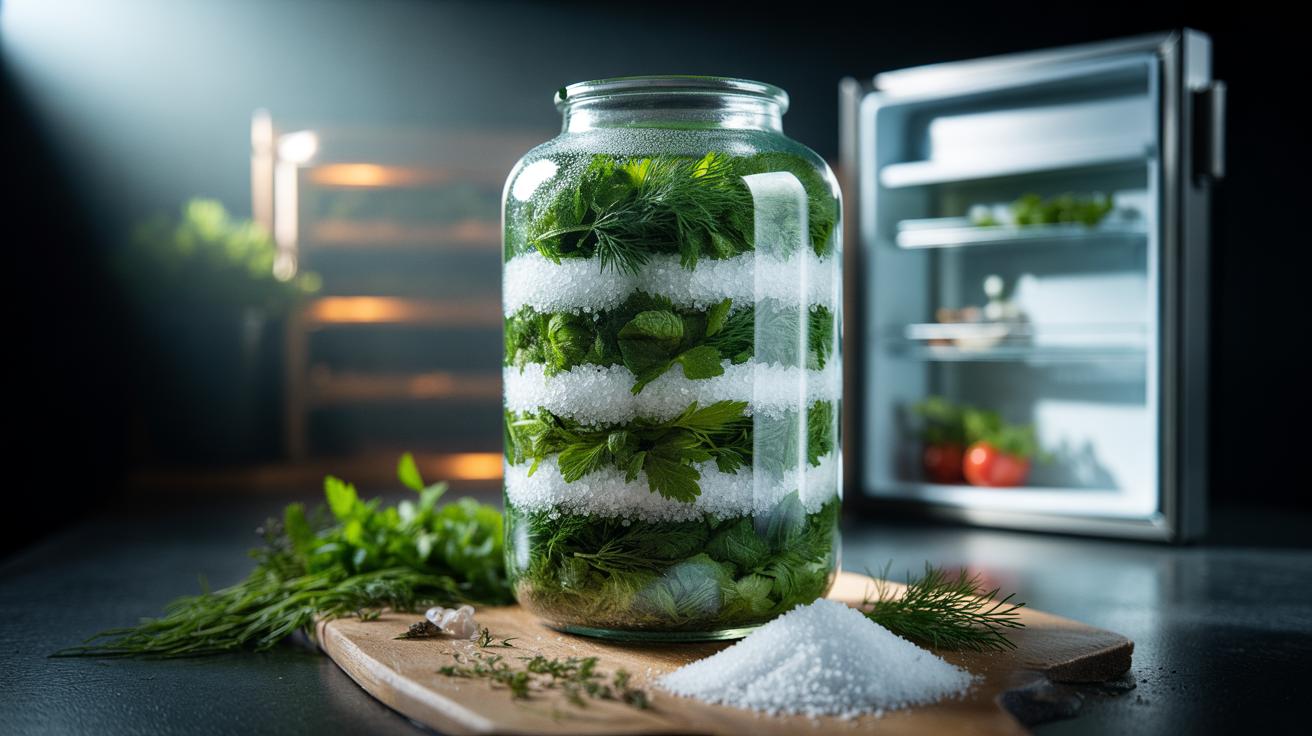
3. Layer with salt. Add a thin base of coarse sea salt. Scatter a loose layer of leaves and tender stems. Sprinkle salt again. Repeat to the shoulder of the jar. Aim for roughly 1 part salt to 5–8 parts herbs by weight (about 15–20 g salt per 100 g herbs) depending on leaf tenderness and storage length. Finish with a generous salty “cap”.
4. Pack and seal. Press gently to remove air pockets but don’t crush. Wipe the rim, fit the lid, and label with date and herb type. Refrigerate promptly at 0–5°C. Do not add water or oil.
5. To use. Lift out what you need with a clean utensil. Rinse quickly or soak for 1–2 minutes to moderate saltiness, then pat dry. Return the jar to the fridge immediately. Top up with a pinch of salt if brine forms and leaves are exposed.
Choosing the Right Salt and Containers
Your choices shape flavour and texture. Coarse sea salt is the workhorse: clean, mineral, easy to distribute. Kosher salt is also excellent, though brands vary in density. Avoid heavily iodised table salts for herb preservation; iodine can nudge flavours metallic, and fine grains pack too tightly, over-salting fragile leaves. As for containers, non-reactive glass with tight-fitting lids is best. Sterilise, dry fully, and cool before filling. Clean tools and dry herbs are non-negotiable; contamination shortens shelf life.
Use the guide below as a quick reference for common UK kitchen herbs and realistic fridge lifespans. Ratios are forgiving—lean saltier for longer storage or very tender leaves, lighter for short-term use when flavour purity matters.
| Herb | Salt Type | Salt:Herb (by weight) | Expected Fridge Life | Rinse Before Use? |
|---|---|---|---|---|
| Parsley | Coarse sea | 1:7 | 3–5 weeks | Usually, quick rinse |
| Coriander | Coarse sea | 1:6 | 3–4 weeks | Yes, brief soak if sensitive |
| Dill | Kosher | 1:8 | 4–6 weeks | Optional |
| Mint | Coarse sea | 1:6 | 3–4 weeks | Yes |
| Basil | Kosher | 1:5 | 2–3 weeks | Yes; expect darkening |
Flavour, Nutrition, and Kitchen Uses
Salted herbs taste like themselves—only steadier. Expect a gentle savoury lift and a slight tenderising of leaves. Vitamin C is sensitive to time and air, but the reduced water activity and cold storage help retain aroma compounds that make herbs feel “green”. The payoff is consistency: a clean hit of herbiness on any weekday, without the wilting lottery.
In the kitchen, think speed. Fold rinsed, patted-dry parsley into omelettes; stir dill through yoghurt for instant tarator; blitz coriander with lime for a five-minute dressing; mash mint into peas with butter. Use a pinch of the salty crystals from the jar to season soups or beans—free flavour. For lower sodium, rinse longer and pair with lemon, vinegar, or chilli to keep dishes bright without extra salt. Compound butters, herb sauces, and stuffings are particularly forgiving when using pre-salted greens.
Because the method lightly cures, herbs won’t behave like just-picked in raw salads. Embrace that. They shine in cooked dishes, sauces, marinades, and as finishing sprinkles on roasted veg or fish.
Safety, Storage, and Troubleshooting
Store jars in the coldest part of the fridge, not the door. Keep lids tightly closed. Always use clean, dry utensils to avoid introducing moisture or crumbs. If the aroma turns sour, the colour goes muddy grey, or you see mould, discard immediately. A little brine formation is normal as salt draws moisture; if leaves peek above it, add a thin salt layer and re-press gently.
Common hiccups are fixable. Too salty? Rinse longer, then pat dry; for soups, add a pinch of sugar or acidity to balance. Herbs swimming in liquid? Drain a tablespoon, sprinkle fresh salt, and chill. Basil blackening fast? Use more robust leaves like parsley or dill, or increase salt ratio slightly. Avoid preserving in oil unless you’re following tested, high-salt, refrigerated methods; oil can create anaerobic pockets. Glass jars beat plastic for odour control and ease of sterilising.
Date and rotate jars—first in, first out. Label clearly. When in doubt, trust your senses and stay conservative with storage times. If in doubt, throw it out. With a steady routine, you’ll find the sweet spot where flavour, texture, and convenience align.
Salt is more than a seasoning; it’s a quiet guarantee that your herbs won’t let you down on Wednesday night. With a jar, a handful of coarse crystals, and ten spare minutes, you’ve got a miniature larder that cuts waste and unlocks midweek creativity. The payoff is immediate: brighter sauces, faster dinners, and fewer limp bundles in the bin. Ready to try it—and which herb will you preserve first, parsley for versatility or dill for that bracing, Scandinavian snap?
Did you like it?4.7/5 (24)